Cold Light, Warm Room: Picking Windows for the Side That Never Sees Sun

Photo: Bill Nicholls, CC BY-SA 2.0, via Wikimedia Commons
North-facing rooms get a bad press in the UK. They miss the direct sun, so in November they can feel grey by 3pm, and the glass can look cold even when the radiator is on. But a north-facing room is not a glazing problem to be solved with the most expensive glass on the van. It is a room that needs a slightly different specification: one built around diffuse daylight, warmer internal surfaces and sensible ventilation. Here is how to think it through without overpaying.
Start with how the room is actually used
A north-facing home office is a different job from a north-facing bathroom. Soft, even light is brilliant above a desk because it does not throw glare across a screen. The same light can feel flat in a living room where you want a bright, welcoming feel. Bedrooms are usually fine with cooler light, but you may notice cold glass near the bed. Bathrooms and kitchens bring moisture, so ventilation and surface temperature matter more than chasing every extra bit of daylight. Decide the main use first, then spend accordingly. If the room is a box room or a hallway, a slim frame and a lower sill may buy more useful light than a fancy coating.
Glass: low-e is the baseline, solar control is usually the wrong spend
Every modern sealed unit should have a low-e coating. That coating reflects heat back into the room and helps keep the inner pane warmer, which is exactly what a north-facing room wants. What it usually does not want is solar-control glass. Solar control is designed to reduce heat coming in from direct sun. On a north-facing elevation there is very little direct sun to block, and some solar-control coatings can take the edge off daylight or give the glass a slight tint. If a salesperson is pushing a solar-control upgrade for a shady room, ask what problem it is solving. Often the honest answer is none.
Ask for the whole specification, not just the word energy efficient. A useful quote will state the U-value of the whole window, the Window Energy Rating, the glass make-up and whether it includes argon, a warm-edge spacer and a low-e coating. Triple glazing can be a reasonable choice if you want the extra thermal comfort or you are staying in the house for the long haul, but it is not automatically required. A well-made double-glazed unit with a good frame and a warm-edge spacer is often a sensible balance. Put the money into fitting quality and ventilation before you put it into coatings you do not need.
Frames and sightlines: let the light in
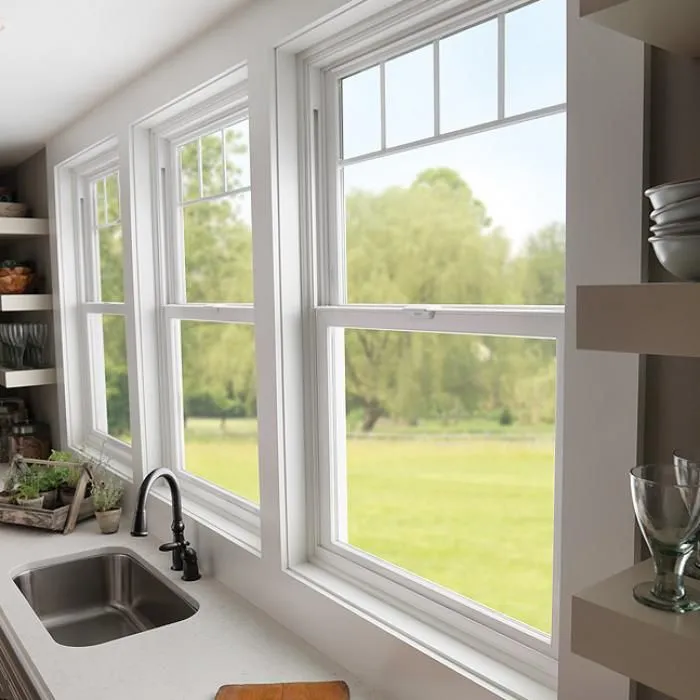
North-facing rooms do not have light to waste, so frame design matters. Chunky profiles eat glass area. Slimmer frames and fewer horizontal bars give you more daylight and a less cluttered view. That does not mean choosing a weak frame. uPVC, timber and aluminium all have good options, but check the thermal performance rather than judging by the brochure. Aluminium needs a proper thermal break. Timber needs a finish that suits the exposure. uPVC varies a lot in chamber design and reinforcement. Also think about colour: a dark frame can look heavy against a dim sky, while a lighter internal finish can help the room feel less closed in. This is as much about perception as physics, but in a north-facing room perception counts.
Sill heights, radiators and curtains
A lower sill gives you more glass and more daylight. It can transform a small north-facing room. But dropping the sill has consequences. Upstairs, you may need safety glass and opening restrictors, and the installer should talk you through that. Inside, a lower sill can limit furniture placement and affect where a radiator goes. A radiator under a window is not a design accident: it can help air circulation and keep the glass surface warmer, which reduces the chance of condensation. Heavy curtains that cover the radiator or sit over the glass all day will undo some of that benefit. If you are replacing windows, plan the curtain stack and blind position at the same time.
Ventilation is part of the specification
Colder glass plus warm, moist indoor air is the recipe for condensation on a north-facing window. Better glazing helps because the inner pane stays warmer, but it is not a substitute for air changes. Trickle vents, extract fans in bathrooms and kitchens, and not sealing every gap in the room all matter. If you are upgrading windows, keep the ventilation strategy in the quote. A room that is warm and airtight but damp is not comfortable, and it is not energy efficient in any useful sense.
The questions to ask before you sign
Ask for the glass make-up, the whole-window U-value, the energy rating and the warranty terms. Ask whether the price includes trickle vents, safety glass where needed, and proper making good. Check the installer is in a competent person scheme such as FENSA or Certass, and get more than one quote. A north-facing room is a good test of a window company, because it is not the showroom's sunny south-facing display. If they can explain why you do not need solar control, and what you do need instead, that is a good sign.
The short version
Specify for shade, not sunshine. Choose a good low-e unit, a thermally sensible frame with slim sightlines, a sill height that suits both daylight and safety, and a ventilation plan that deals with moisture. Skip solar-control glass unless there is a specific overheating reason. Then spend what you save on better fitting and a clearer warranty. A north-facing room will never be a sun trap, but it can be comfortable, bright enough and cheap to run.