The Lamp, the Cutaway and the Sales Folder: Sorting Proof From Theatre in a Window Demo
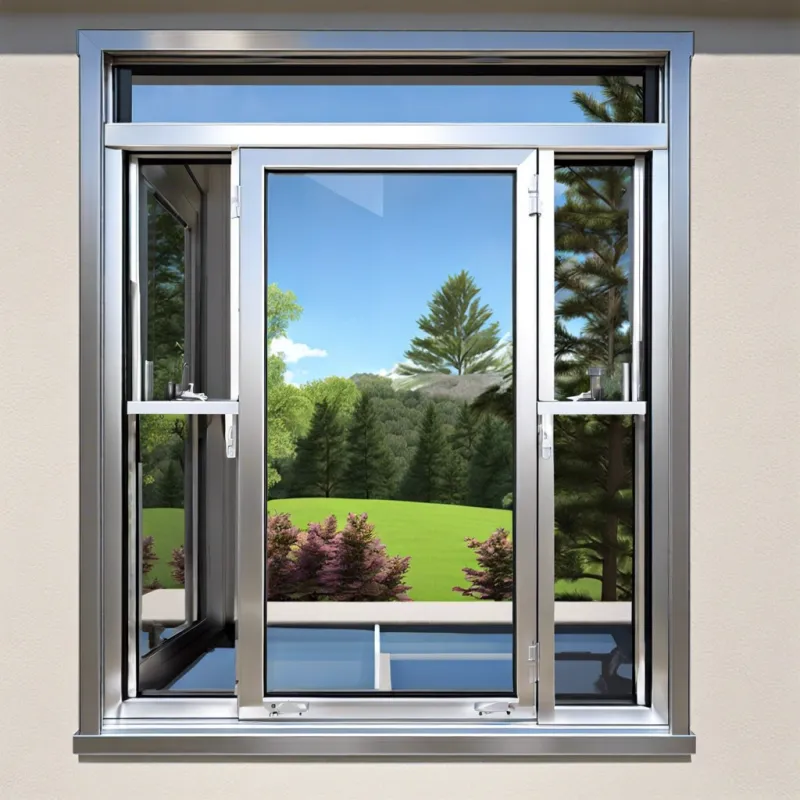
Photo: window salesperson showing glass sample and thermal lamp to homeowner at kitchen table UK, via windowdigest.com
There is a moment in many a window sales visit when the folder comes out. Out follows a square of glass, a small infrared lamp, a chunk of frame cut in half, maybe a little speaker that makes traffic noise disappear. It can be impressive. It can also be quietly misleading. The trick is not to be cynical about every prop on the table — some of them tell you real things about how a window is built — but to know which claims are backed by a certificate and which are just a nice bit of theatre.
The thermal lamp: a good story, not a full test
A salesperson holding a heat lamp against a sample frame is trying to show you that one product blocks radiant heat better than another. As a visual aid, it works. Warm-edge spacers, low-emissivity coatings and argon-filled cavities really do change how heat moves through a window.
What the lamp does not do is give you a U-value for the window you are actually buying. A small sample in a warm living room is not the same as a full-size window fitted into a wall, with the right seals, the right reveal and the right amount of insulation around the frame. So enjoy the demo, but treat it as an illustration rather than a measurement.
Instead, ask for the certified performance figures. In the UK, that usually means the BFRC rating or a Window Energy Rating (WER) certificate, plus a datasheet showing the U-value for the specific frame, glass and spacer combination. A good installer will have these to hand or will send them within a day or two. If the answer is a vague 'it's A-rated, mate', press a little further. A-rated what, exactly, and for which product?
The glass cutaway: useful if it matches your quote
A cutaway of a sealed unit is one of the better props. You can see the thickness of the glass, the spacer bar and, sometimes, the low-e coating. That is genuinely helpful when you are comparing a basic double-glazed unit with a higher-spec one.
But the sample has to match what is going into your quote. It is surprisingly common for a demonstrator to show a top-spec unit with a warm-edge spacer and a laminated pane, while the written quote quietly specifies something more modest. Ask the salesperson to point to the exact line in the quote that matches the sample. If the sample is not the product, it is not evidence.
While the cutaway is on the table, ask about the spacer bar and the gas fill. Argon is standard in many units now; krypton is sometimes used where the cavity is narrower. Neither is a magic ingredient, but both should be named in the specification if they are being sold as part of the performance.
The noise demo: handy, but ask for the number
A small speaker that plays traffic noise and then goes quiet behind a sample pane is a clever bit of salesmanship. It can make an acoustic window feel like a miracle. In reality, sound reduction depends on the whole assembly — the glass, the frame, the seals, how the window is fitted and even the room it is fitted into.
If noise is your main reason for buying, ask for the acoustic rating of the complete window, not just the glass. Look for an Rw or Rwn figure quoted against a recognised standard such as BS EN ISO 717. A good acoustic window might be rated around 35 dB or higher, but the number only means something when it is tied to a specific product and a specific installation detail.
And be wary of the phrase 'acoustic glass' on its own. Laminated glass helps, and asymmetric units — different glass thicknesses on each pane — can help more. But the demo should lead to a specification, not just a quiet moment at the kitchen table.
The frame cutaway: ask what is inside the chamber
A cut section of uPVC or composite frame can show you the number of chambers, the reinforcement and the wall thickness. That is real information. More chambers are not automatically better, but a well-made frame should have sensible internal structure and, where needed, steel or aluminium reinforcement.
Ask whether the reinforcement is galvanised, how the frame is welded or mechanically jointed, and what the manufacturer's warranty covers. A cutaway that shows a nice thick outer wall but says nothing about reinforcement is only half the story.
The security demo: good theatre, better paperwork
A salesperson locking and unlocking a handle, or showing a multi-point lock with mushroom cams, is demonstrating the hardware. That is useful — you want to see and feel the lock. But security is not proved by a satisfying clunk.
For doors and vulnerable windows, ask about PAS 24 certification and whether the product is tested as a complete doorset or window. Ask for the certificate reference and check that the hardware on the certificate matches what is being quoted. A good composite door or secure window will have documented test evidence, not just a persuasive demonstration.
The questions to ask before the samples go back in the bag
A short list, kept on your phone, will do more for you than any lamp:
- Which exact product is being quoted, and can I see its BFRC or WER certificate?
- What is the certified U-value for this frame, glass and spacer combination?
- If noise is the issue, what is the acoustic rating of the complete window?
- Is the product PAS 24 certified, and does the certificate match the hardware quoted?
- Who will install it, and are they FENSA or Certass registered?
- What does the warranty cover, and who honours it if the installer stops trading?
- Can I see a completed installation nearby, or speak to a recent customer?
What the demo is really for
A good sales visit should end with a clear, written specification and a set of documents you can check at your own pace. The props are there to start a conversation, not to replace one. If a salesperson can show you the sample, explain the specification and then produce the certificate that ties the two together, that is a healthy sign. If the demo is dazzling but the paperwork is thin, thank them for the tea and keep your deposit in your pocket.
In 2026, the information is out there. A convincing window purchase should rest on certified performance, a clear installation plan and a fitter whose work you can verify — not on a lamp that makes a square of glass feel warm.