Before the Factory Cuts Anything: Giving Your Window Survey a Proper Look
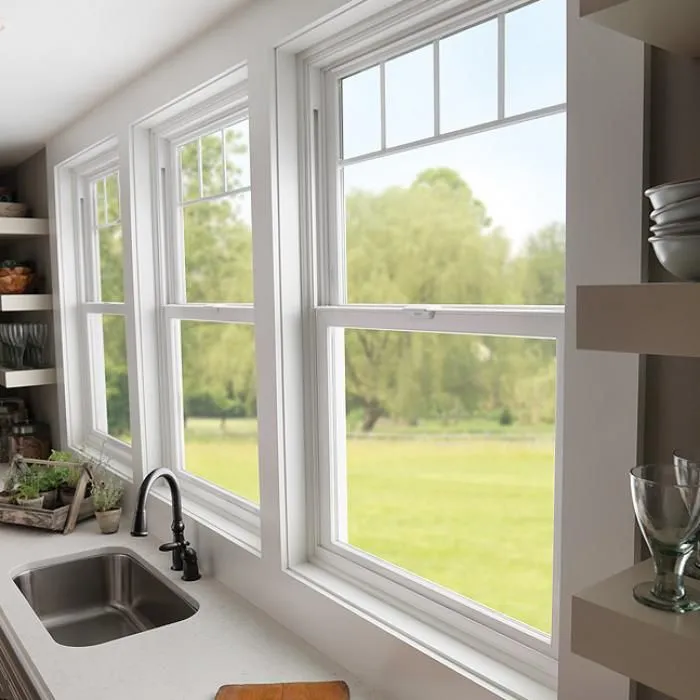
Photo: window surveyor measuring uPVC window reveal with tape measure inside UK home, via i.pinimg.com
If you have just signed for new windows or a door, the survey visit can feel like a box-ticking exercise. The salesperson has gone, the deposit has cleared, and someone arrives with a clipboard and a laser measure. It is tempting to put the kettle on and let them get on with it. Don't. In a sensible installation, the survey is where the job is either made straightforward or quietly loaded with problems.
A survey is not another sales pitch, or at least it shouldn't be. It is the point where your order turns into manufacturing instructions. Get it right and fitting day is mostly about careful work. Get it wrong and you end up with trims doing the heavy lifting, sealant covering a mystery, and a fitter saying the words no homeowner wants to hear: 'We'll sort it on the day.'
What the survey is actually for
A proper survey should confirm the sizes, the wall construction, the fixing points, the drainage route, the ventilation arrangements and how the new frames will sit against the existing plaster lines. It should also flag anything that might affect access, safety or building regulations. In England and Wales, for example, replacement windows and doors need to comply with relevant requirements, and ventilation and fire escape are not afterthoughts.
If your installer treats the visit as a quick measure-up, that is worth questioning. Measuring the opening is only part of the job. The surveyor should be checking how the window will actually fit into the hole you have, not just how wide and tall the hole is.
The measurements that matter more than width and height
Reveal depth is a good place to start. How far back does the new frame need to sit? Will the internal sill and plaster finish still work? If the old frame is coming out, is there enough space for the new one plus insulation and trim without eating into the room?
Squareness matters too. Walls move, openings settle, and old houses are rarely straight. A surveyor should be checking diagonals, levels and plumb, not just the width at the widest point. If an opening is out of square, the survey sheet should say so. The factory needs to know, and so do you.
There is a shortcut to watch for: measuring the brick opening and ignoring the plaster line. It can be fine, but it can also mean the new frame sits proud or leaves a gap that gets filled with an oversized trim. Ask how much frame will be visible and how the finish will meet the wall.
Look up before you look out
Above every window and door there is something doing structural work, whether it is a lintel, a concrete head or a timber beam. A surveyor should be looking for cracks, sagging, movement or previous repairs. If the lintel looks tired, that is not a window problem. It is a building problem that needs sorting before new frames go in.
This is one of the clearest moments to pause. A fitter can pack and seal a frame, but they cannot make a failing lintel safe with a tube of mastic. If the survey raises a structural question, get it answered properly rather than letting the installation run ahead.
Water needs a route out
Windows and doors are designed to shed water, not to be waterproof in the way a boat is. Cills need the right fall, drainage slots and weep holes need to be clear, and thresholds need to work with the floor level. Patio and bi-fold doors are especially fussy about thresholds, because a low step can look smart but leave water with nowhere sensible to go.
Ask the surveyor where water will run off the new window or door. If the answer is vague, or relies entirely on sealant, push for detail. Sealant is a joint filler, not a drainage strategy.
The details that decide whether you enjoy the room
Trickle vents are a common source of irritation. They need to be positioned where they can actually work, not hidden behind a curtain or blocked by a blind. If a vent is going into a window above a radiator, think about how the air will move and whether the vent will be reachable.
Radiator clearance is another one. A new window with a deeper frame or a different opening arrangement can clash with a radiator, a worktop, a tap or a blind. The surveyor should note these things while standing in the room. It is much easier to adjust a handle position or opening direction before manufacture than after the frame arrives.
Also check opening lights against furniture and walkways. A window that opens into a busy corner is technically fine but practically annoying. A door that swings against a radiator is the same story.
Shortcuts that become fitting-day excuses
Here are the classic survey shortcuts. Measuring one window and assuming the rest are identical. Failing to note that a wall is out of plumb. Ignoring a cable, pipe or alarm sensor near the frame. Not checking whether a large frame can actually be carried through the house. Not recording the vent requirement. Not asking about access for scaffolding or a ladder.
None of these are dramatic on their own. Together they turn a straightforward job into a day of compromises. Once the factory has cut the frames and sealed the glass units, changes cost time and money. That is why the survey deserves proper attention.
Questions to ask while the surveyor is still in the room
Ask how the new frame will sit in the reveal and how the finish will meet the plaster. Ask whether the lintel or head has been checked. Ask where the water will drain from the cill or threshold. Ask where the trickle vents will go and whether anything will block them. Ask whether the radiator, blinds or kitchen units will interfere with the window opening.
Finally, ask what has changed from the original order and whether any of it affects the price or the lead time. A good surveyor will not mind these questions. A vague answer is useful information in itself.
When to pause rather than hope
Pause if the surveyor says 'we'll sort it on the day' about something structural. Pause if the measurements do not match what you thought you ordered. Pause if ventilation cannot be fitted where it is needed, or if the threshold detail looks like it will trap water. Pause if access is unsafe or the installation plan relies on guesswork.
A short delay before manufacture is far cheaper than a standoff after the van has arrived. The best survey is a boring one: everything checked, every awkward detail written down, and nothing left for the fitting team to discover. That is not fussy. It is how a good window job starts.