All at Once or a Room at a Time? A Realistic 2026 Plan for Replacing Your Windows

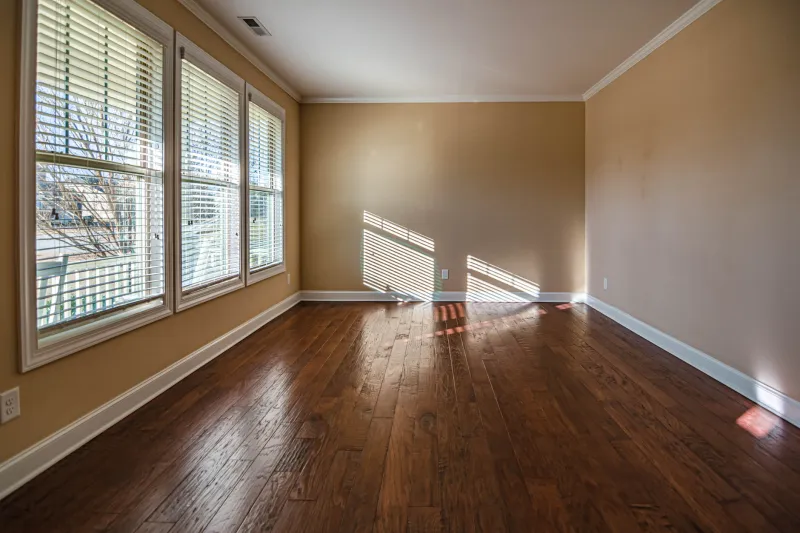
Photo: George E. Koronaios, CC BY-SA 4.0, via Wikimedia Commons
The quote lands on the kitchen table, you read the total, and then you read it again. Twelve windows and a back door, fully fitted, and a number with five figures in front of it. The salesperson's line is familiar: 'It's cheaper to do the lot in one go.' That's true, as far as it goes. It just isn't the whole truth.
Plenty of households simply cannot write that cheque, and plenty more could but would rather not hand over their entire savings in one afternoon. Neither of those is a failure of planning. What matters is choosing the route deliberately rather than being nudged into one by a discount that expires on Friday.
What a single whole-house job genuinely buys you
There are real savings in doing the work in one hit, and it's worth being clear about them rather than pretending they don't exist.
- One scaffold, one hit. Scaffolding for a two-storey house can easily run to several hundred pounds, and you pay it once instead of twice.
- One crew, one rhythm. Fitters who work through every room in a continuous run are quicker per window than someone returning for a half-day here and there.
- Frames that match. Windows from the same profile and batch look identical. Come back in two years and the profile may have been discontinued, or the white may be a slightly different white.
- One set of paperwork. Building Regulations notification and Competent Person scheme registration are per job, not per room.
- A better price per window. Volume discounts of somewhere between 5% and 15% are common, though never assume the first quote reflects it.
The catch is that all of this is only a bargain if it doesn't leave you with no contingency for the things that always turn up — a boiler that gives up in January, a car that fails its MOT.
Where phasing actually wins
Doing it room by room is often described as the poor relation. In practice it has advantages that a single job can't offer.
You get to test the installer on a small job before trusting them with the whole house. You get to live with a finished room and discover what you'd do differently — a different opening light, a lower sill, handles that don't catch on the curtain. You spread the disruption so the house is never fully upside down at once. And you keep cash in reserve.
There's also an honest point about decision fatigue. Choosing glass, handles, colours, trickle vents and sill details for twelve openings at once is a lot to get right in a fortnight.
Picking which room goes first
If you're phasing, the order matters more than anything else. Score each room honestly on five things and the sequence usually sorts itself out.
Heat loss. Single-glazed, north-facing, large panes and a room you actually heat all score badly. A cold box room nobody uses scores well, however ugly it looks.
Condensation. If water is running down the glass every morning and the frames are rotting, that's a repair job, not a comfort upgrade. Deal with it early.
Noise. A bedroom facing a main road, a railway line or a flight path deserves priority over a landing window.
Security. Ground-floor windows at the back, anything near a flat roof or a wheelie bin that doubles as a step, and any door that doesn't lock properly.
Kerb appeal. The front elevation is what you and the street see every day. If the house looks tired from the pavement, a front-facing phase can be worth moving up the list.
A simple 1–5 score across those five columns, added up, will usually put two rooms at the top. Start there.
The costs of phasing that nobody quotes for
Be clear-eyed about the downsides, because they're real.
Small jobs carry a minimum charge. A two-window order often costs disproportionately more per window than a twelve-window one. Scaffolding may be needed twice, and some firms will only quote for a full elevation, which can drag an extra window into the job. Prices rise between phases — a quote given in 2026 won't hold in 2028. Paperwork gets repeated.
And matching is the big one. Ask, in writing, how long the profile and colour you're buying will remain available, and whether the firm will hold spares. If the answer is vague, either buy all the frames in one order and have them fitted in stages, or accept that a later phase may look slightly different.
Not every job needs scaffolding
Bungalows, ground-floor flats and single-storey extensions can often be done from ladders or a small tower. Upper floors, bays and anything over a conservatory normally can't. If you're phasing to avoid scaffold costs, ask each installer whether the room you're doing actually needs it — the answer isn't always yes.
What a staged plan looks like
Take a typical 1930s semi with eight windows and a front door. Phase one might be the two bedrooms at the front — coldest, noisiest, and the ones you look at from the street. Phase two, six to nine months later, the living room and the back bedroom. Phase three the kitchen, bathroom and hallway, with the front door timed to coincide with a planned repaint.
Built into that plan is a contingency of around 10% and a note of the price each phase is likely to cost if it rises by 5% a year. It isn't glamorous. It is, however, the sort of plan that survives contact with real life.
Paying for it
If finance is part of the answer, read the APR rather than the monthly figure, check whether early repayment carries a penalty, and be wary of deals that run longer than the windows are guaranteed. Watch for deposits: a 25% deposit on a twelve-window job is a lot of money to hand over before anything has been measured. There is no general grant for replacement windows in 2026, so treat any 'we'll sort the funding for you' claim with a raised eyebrow.
Whichever route you take, get an itemised quote, a written specification, confirmation of Competent Person scheme registration or a Building Regulations application, and an insurance-backed guarantee. Those four things matter more than the discount.
All at once or a room at a time? Both are legitimate. Just make the choice on purpose.