Your Old Windows Don't Vanish: The Waste Trail Behind a Tidy Installation
There is a moment during a window replacement when the job suddenly looks finished: the new frames are in, the seals are neat, and the old glass and plastic have been carried out to a van. Then the van drives off. For most homeowners, that is the end of the story.
It isn't, really. Every old window has to go somewhere. In the UK, that journey is covered by waste rules, and a replacement job can create a surprising amount of material — frames, sealed glass units, handles, hinges, trims, and sometimes timber or aluminium sections. None of it disappears because the fitter has a big van and a cheerful manner.
What actually leaves your house
A typical three-bedroom semi can produce a fair stack of old frames during a full replacement. uPVC is bulky but light. Glass is heavy and needs careful handling. Timber frames may be rotten, painted, or treated with finishes that affect how they can be processed. Aluminium is valuable as scrap but still needs to reach the right place.
Once a business removes that material from your home, it is generally treated as controlled waste. That means the waste duty of care applies. In plain English, waste has to be stored safely, transferred to someone authorised to take it, and described accurately. It should not be fly-tipped, burned in a skip, or handed to a man with a transit van and no paperwork.
This is not a reason to panic about your installer. Most reputable firms handle it properly every day. It is a reason to ask a simple question before you sign: what happens to the old windows?
The bit of paper that matters
When waste changes hands, a waste transfer note should be completed. It records what the waste is, how much there is, where it came from, where it is going, and who is taking it. For a householder, the key point is that a legitimate installer should be able to show they are a registered waste carrier and that the material is going to a permitted site.
Registration is handled by the environmental regulator for the nation — the Environment Agency in England, Natural Resources Wales, SEPA in Scotland, and the NIEA in Northern Ireland. You do not need to memorise the details. You just need to know that a professional outfit will not mind you asking.
If your installer says something vague like “we sort it at the yard” or “the lads deal with that”, ask for the name of the waste carrier and the destination site. If they are subcontracted, that is fine — but the trail should still exist. A firm that cannot tell you where your old windows are going is a firm that has not thought carefully about the question.
Where old frames can actually go
Not all old windows are treated the same. uPVC frames can be recycled, and there are specialist recyclers in the UK that process PVC-U back into new profiles and other products. Glass can sometimes be recycled, although sealed units are more complicated because of the spacer bars, coatings, and the fact that the glass is often contaminated or mixed. Aluminium is widely recycled as scrap metal. Timber may be reused, recycled, or sent for energy recovery, depending on its condition and treatment.
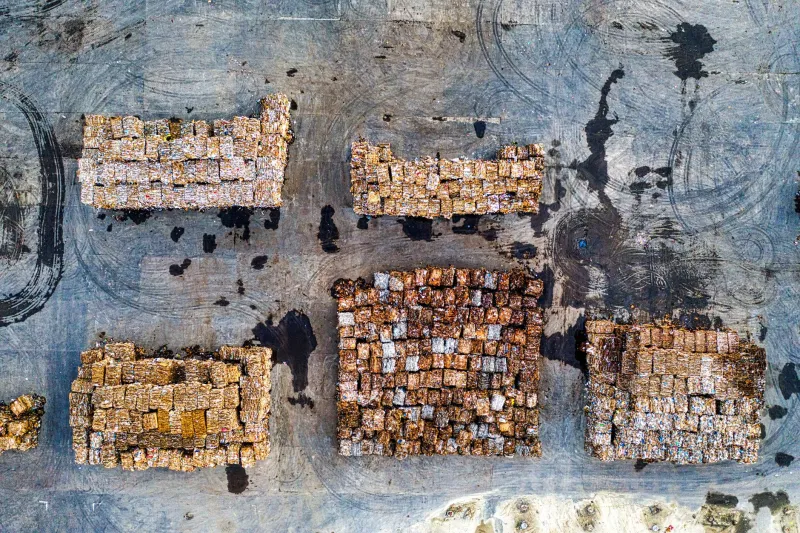
The honest answer is that recycling rates vary by area and by installer. Some firms separate frames and glass carefully. Others send mixed loads to a transfer station where the material is sorted. Some old windows will still end up in landfill or energy-from-waste because the practical options in that part of the country are limited. That is not ideal, but it is better than a false promise that every frame becomes a new one.
Ask what actually happens rather than whether the job is “green”. A clear answer — “frames go to a PVC recycler in [town], glass goes to a transfer station, we get a transfer note” — is worth more than a glossy sustainability claim.
The fly-tipping trap
Fly-tipping is a real problem in the UK, and old windows are exactly the sort of bulky, awkward waste that turns up on laybys and back lanes. If your installer is cutting corners, the first sign may be a cheap price and no paperwork. The second sign may be a pile of frames in a hedge three miles away.
Householders can also create a problem by hiring a skip or a man-and-van without checking where the waste is going. If you arrange disposal yourself, you become the person transferring the waste. Use a registered carrier, ask for a waste transfer note, and keep it. It is dull paperwork, but it is the difference between a clean job and an awkward conversation with the council.
Questions to ask before you sign
- Will you remove the old windows and doors as part of the price?
- Are you a registered waste carrier, or is a registered carrier collecting from you?
- Can I have a copy of the waste transfer note after the job?
- Where will the frames, glass, and metal actually go?
- Do you separate uPVC and glass, or does it leave as mixed waste?
- If I hire a skip instead, which permit or hire paperwork do I need?
None of these questions are hostile. They are the same sort of checks you would make before handing over a deposit. A good installer will have straightforward answers because they have done the job properly before.
A tidy job ends with a tidy trail
You will never frame your old windows and hang them on the wall. But the way they leave your home says something about the firm you have hired. A neat installation is good. A neat installation with a clear waste trail behind it is better. Before the fitters arrive in 2026, ask where the old frames are going — and keep the paperwork when they do.